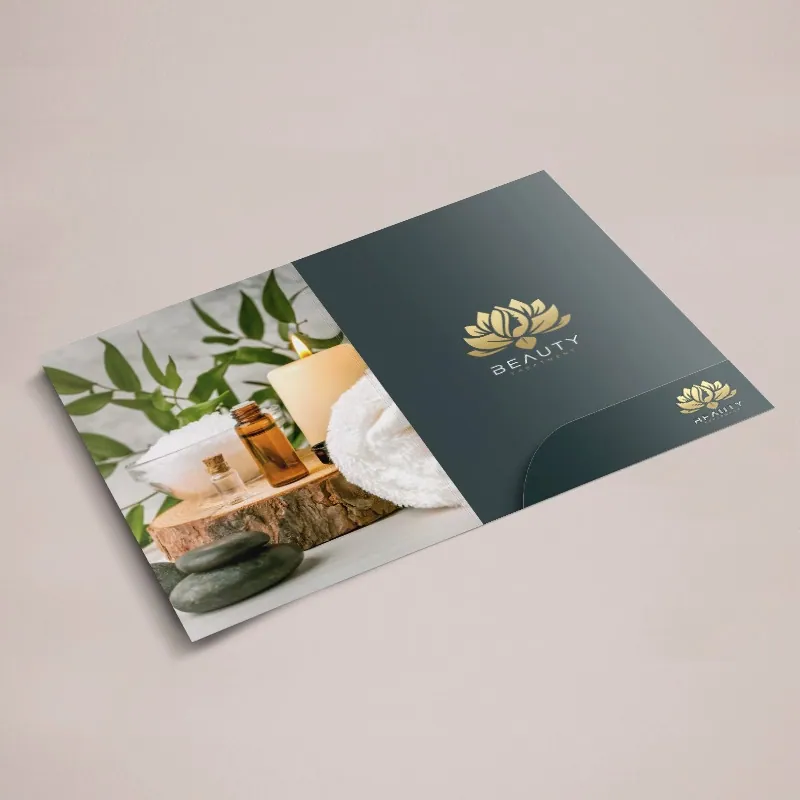
On this page 9 sections
The main presentation folder sizes are A4 (for A4 documents), A5 and DL. A spine of 3 to 10 mm lets the folder hold more sheets: no spine suits a few pages, 4 to 5 mm a typical proposal, 10 mm a thick pack. Choose 350gsm or 400gsm card, matt or gloss lamination, and optional business card slots.
Sizes
A presentation folder is named by the documents it holds, not by its own outside size, so an A4 folder is a little larger than an A4 sheet.
| Folder | Holds | Typical use |
|---|---|---|
| A4 | A4 sheets | Proposals, welcome packs, conference packs, sales brochures |
| A5 | A5 sheets and leaflets | Hotel and spa information, course handouts, price lists |
| DL | DL leaflets and compliments slips | Restaurant and hotel information, ticket wallets |
Our presentation folders come as A5 with a 5 mm spine, or A4 with no spine, a 4 mm spine or a 5 mm spine. Interlocking presentation folders add a DL size with a 6 mm spine, A5 with no spine or 3 mm, and A4 with no spine up to 10 mm.
Pockets and capacity
The spine decides how much a folder can hold before the pocket bulges.
- No spine: a few sheets, such as a single quote or a one-page price list.
- 3 to 5 mm: the most common choice. Comfortably holds a proposal, a brochure and a few loose pages.
- 6 mm (DL): a stack of leaflets or tickets.
- 10 mm: induction packs, course materials, tender documents.
Every folder has a pocket on the inside right. Business card slots are an option, cut into the pocket so your card sits in view the moment the folder opens. That is a simple way to make sure the client knows who to call.
Stocks and finishes
Standard folders use 350gsm or 400gsm silk card. The heavier 400gsm board feels more rigid and stands up better on a desk, which suits thicker packs. Interlocking folders use 350gsm silk.
Lamination protects folders that are handled a lot, carried in bags or used across several meetings.
- Matt: calm and smart, resists fingerprints; the default for professional firms.
- Gloss: bright and vivid, suits photographic covers.
- None: fine for one-off packs, and slightly easier to write on.
Printing can be outside only or outside and inside. Printing inside lets you put a welcome message, a contents list or your services on the inside left flap.
Glued or interlocking
Folders are made in two ways. Glued folders have their pockets fixed with adhesive. Interlocking folders are cut so the pocket flaps slot together, with no glue at all.
Interlocking construction has two practical advantages: it offers more size and spine combinations, and the folders are often quicker to make. Glued folders have a very clean look and suit heavier board. For most proposals, either works well.
Short runs and branded portfolios
If you need a small number, short run presentation folders can be ordered from 10 to 250, to take A5 or A4 documents. They add matt, gloss or soft touch lamination, an optional business card pocket, filing strips and a triangular pocket style.
For something more like a binder, A4 portfolio folders are navy folders branded with your logo, suited to contracts, course notes and welcome packs that need to last.
Designing the folder
A folder cover is seen across a meeting table, so it should work at a distance. A large logo, a strong colour or a single image, and very little text. Put contact details on the back and the inside.
Practical points
- Set the artwork up on the exact template for your folder size; flaps, pockets and spines all have fixed positions.
- Keep text away from folds and the spine.
- Remember that the pocket covers part of the inside right panel.
- Make sure the back cover makes sense when the folder is lying face down on a desk.
Folders work best as part of a set. A matching letterhead, business card and compliment slip inside a branded folder look like they came from one organised company. The colour and finish advice in our printed greeting cards guide applies just as much to folders.
Quantities
Standard and interlocking folders run from 10 to 1,000. A small firm handing a folder to every new client might use 100 a year. A college or conference organiser may need several hundred at once. The price per folder falls as quantity rises, and live prices on each product page update as you change size, card and lamination.
Folders take a little longer than flat print because they are cut, creased and assembled: from 7 working days for interlocking and from 9 for glued folders on the Saver speed.
Storage
Keep folders flat, in their boxes, away from heat and damp. Laminated folders resist humidity better than unlaminated ones. Assemble packs close to the day you need them so the pockets do not bow under weight.
Browse every folder style and size in our presentation folders range.
Questions
What presentation folder sizes are available?
A4, A5 and DL. A4 folders come with no spine or spines up to 10 mm; A5 and DL have their own spine options.
How many sheets does a presentation folder hold?
It depends on the spine. No spine holds a few sheets, 4 to 5 mm holds a typical proposal, and 10 mm holds a thick pack.
Can I add a slot for a business card?
Yes. Business card slots are an option on standard, interlocking and short run folders.
What is the difference between glued and interlocking folders?
Glued folders fix the pocket with adhesive. Interlocking folders slot together without glue and offer more size options.
What is the minimum order for presentation folders?
Standard and interlocking folders start at 10, as do short run folders.