On this page 9 sections
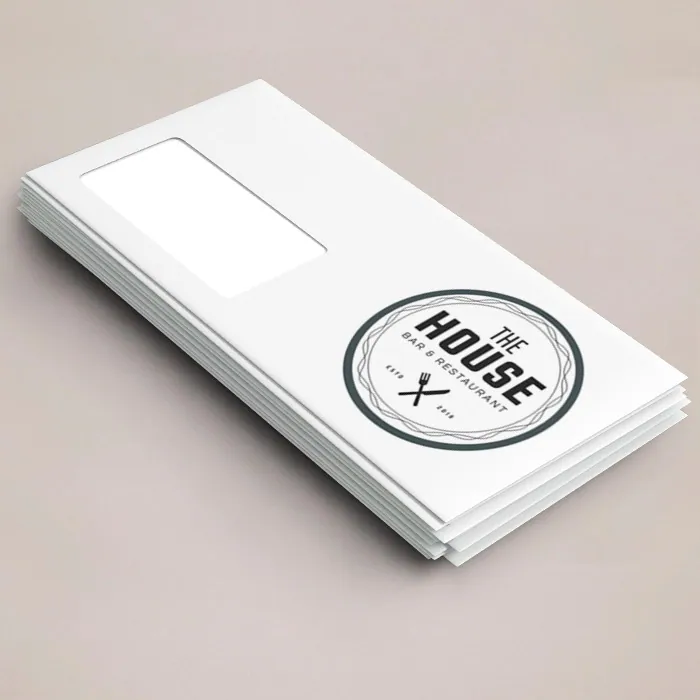
Christmas card envelopes should match the folded card size: C6 for A6, DL for DL, 155 mm square for 148 mm square and C5 for A5. Our Christmas cards include red or white envelopes in the right size. For large business mailings, printed envelopes with a logo and return address help cards get opened and come back if undelivered.
Matching envelope to card
An envelope that fits well protects the card and looks deliberate. Too tight and the card creases on the way in; too loose and it slides around and the corners bend.
| Folded card | Envelope |
|---|---|
| A6 (105 × 148 mm) | C6 |
| DL (99 × 210 mm) | DL |
| 148 × 148 mm square | 155 mm square |
| A5 (148 × 210 mm) | C5 |
When you order Christmas card printing, you choose red or white envelopes in the matching size, so the basics are covered. Red feels traditional and festive; white looks crisp and suits any design. Our guide on when to send Christmas cards explains how long to allow for writing and posting.
Printing a return address
Businesses sending hundreds of cards gain from a printed return address. If a client has moved, the card comes back and you can update your records before next year. It also makes the envelope look like it came from a business the recipient knows, rather than unsolicited post.
Put the return address on the back flap or the top left of the front. Keep it small and simple: company name, street, town, postcode.
Colour and logo
Printed envelopes are white, self-seal, on 90gsm or 100gsm paper, in DL, C5 or C4, with or without a window. Print in black, or in full colour on the front or both sides, from 500 envelopes upwards.
- Full colour logo on the front: recognisable on a doormat full of post.
- A small festive motif: a sprig of holly or a star beside the logo.
- Black only: quieter and very legible, ideal for return addresses.
Keep the address area clear. Royal Mail sorts post by machine, so the recipient’s address needs a clean, light background with no design behind it.
Which sizes work for Christmas cards
Printed envelopes come in DL and C5, which fit DL and A5 folded cards. A6 cards fit inside a C5 with room to spare, which is fine for a small insert or calendar, though a snug C6 looks neater for cards alone.
Rigid mailers for special cards
Foil cards, cards with inserts and corporate gifts benefit from extra protection. Printed cardboard envelopes are rigid mailers printed with your design and laminated on the outside in matt, soft touch or gloss. They protect flat items in the post and turn a card into a small parcel that feels worth opening. They suit top clients, VIP gifts and anything you cannot afford to arrive bent.
Postage sizes
Royal Mail prices letters by size, thickness and weight. Most folded cards in C6, DL or C5 envelopes post as a standard letter if they are thin and light enough. Check current Royal Mail size and weight limits, and weigh one finished card before buying stamps for the whole list.
- Square envelopes sit within letter dimensions at 155 mm, but rules can change, so check before a big mailing.
- A thick insert, ribbon or rigid mailer may push an item into large letter pricing.
- Franking or a postage account can save time on long business lists.
Sealing and packing
Printed envelopes are self-seal, so there is no licking and no moistener needed for a long list. Press firmly along the whole flap. If you add an insert such as a calendar card, put it behind the card so it is the second thing the recipient sees. For foil cards, slide the card in with the foil facing the back of the envelope, which reduces scuffing in the post. Pack finished envelopes upright in a box, in postcode order if you post a large batch, so they go into the post neatly and quickly.
Addressing at scale
Handwritten addresses feel personal and are worth it for key clients. For long lists, print address labels from your contact database and stick them in the same position on every envelope. Window envelopes are rarely used for Christmas cards, as they look like bills. If you use labels, choose a clear sans-serif typeface at a readable size so machine sorting works smoothly.
Ordering enough
Count your list, then add a margin. Envelopes get torn, misaddressed and used for other things.
- For cards with included envelopes, the count matches automatically.
- For printed envelopes, remember the 500 minimum. Spare printed envelopes can be used all year for invoices and letters if you keep the design neutral.
- For rigid mailers, order only for the cards that need them.
Our business Christmas cards guide covers the wider plan, from list to design. Browse envelopes in DL, C5 and C4 in our envelopes range.
Questions
Which Christmas card envelopes fit an A6 card?
A C6 envelope. DL cards take DL envelopes, A5 cards take C5, and 148 mm square cards take 155 mm square envelopes.
Do Christmas cards come with envelopes?
Yes. Christmas card orders include red or white envelopes in the size that fits your fold.
Can I get envelopes printed with my logo?
Yes. Printed envelopes come in DL, C5 and C4, in black or full colour, from 500.
Is it worth printing a return address on Christmas cards?
For business mailings, yes. Undelivered cards come back so you can update your list.
Do square envelopes cost more to post?
A 155 mm square envelope usually fits within letter size, but check current Royal Mail rules and weigh a finished card first.